Skylights add natural light and beauty to any home, but they also create vulnerable points in your roof system. When skylights need replacement, they can cause serious damage to surrounding roofing materials, decking, and even interior ceilings. Recognizing early warning signs allows you to address problems before water infiltration ruins your home’s structure and creates expensive emergency repairs.
Understanding Why Skylights Fail Over Time
Most skylights last between 15 and 20 years under normal conditions. The materials break down gradually from constant exposure to sun, rain, snow, and temperature swings. The seals around the glass or acrylic dome deteriorate first, followed by the flashing system that connects the unit to your roof.
Quality installation matters significantly. Skylights installed without proper flashing or inadequate sealing fail much sooner than correctly installed units. The surrounding roofing materials also play a role. If your shingles have reached the end of their lifespan, the skylight mounting system may have loosened as the roof deck shifts and settles.
How Water Damage Spreads From Failed Skylights
A single small leak around a skylight spreads water across a surprisingly large area. Water follows the path of least resistance, traveling along roof rafters and soaking insulation before you notice ceiling stains. By the time visible damage appears inside your home, the hidden damage often costs three to five times more to repair than the skylight itself.
During freeze-thaw cycles, trapped moisture expands and contracts, accelerating wood rot in the roof decking. This creates a weakened structure that requires extensive roof repair beyond simple skylight replacement. Professional inspection catches these problems before they escalate into emergency situations.
Visible Condensation Between Glass Panes
Double-pane skylights contain a sealed air space that provides insulation. When moisture appears between the glass layers, the seal has failed completely. This condensation will not evaporate or clear on its own. The trapped moisture reduces the unit’s insulating value and creates a cloudy appearance that blocks natural light.
This problem only worsens over time. Temperature differences between inside and outside air cause the moisture to freeze and thaw repeatedly, potentially cracking the glass. Replacing the unit before the glass fails prevents emergency repairs during bad weather.
Cracks, Yellowing, or Discoloration in the Dome
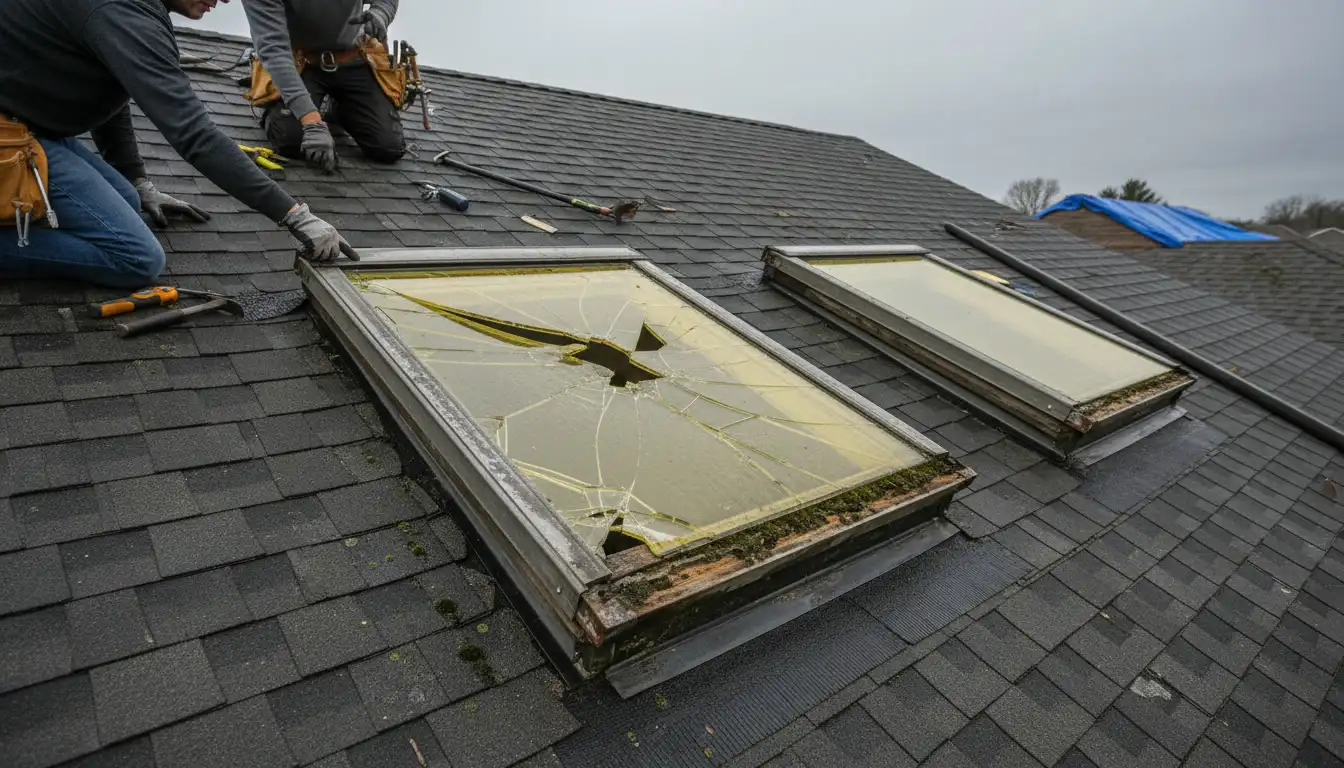
Acrylic and plastic skylight domes yellow and become brittle after years of UV exposure. Small hairline cracks appear first, usually at stress points near the mounting frame. These cracks allow water to seep through during rain, even if the damage seems minor.
Glass skylights develop stress cracks from thermal expansion or impact damage from falling branches. Any visible crack requires immediate attention. A small crack can spread rapidly across the entire pane during the next temperature swing, potentially allowing the glass to collapse inward.
Damaged or Deteriorating Flashing Around the Frame
The metal flashing system creates a waterproof transition between the skylight and your roofing materials. This flashing corrodes over time, especially in coastal areas where salt air accelerates rust formation. Bent, pulled, or separated flashing allows water to run directly onto the roof deck.
Sometimes flashing damage occurs when other roof work happens nearby. Workers walking on the roof may accidentally step on flashing edges, creating gaps. If you recently had maintenance or repairs performed, inspect your skylights carefully for any new separation or damage.
Warning Signs in Gloucester Township Properties
Homes in Gloucester Township experience distinct seasonal challenges that stress skylight systems. Winter ice dams form when heat escapes through poorly insulated skylights, melting snow that refreezes at the roof edge. This ice pushes under shingles and skylight flashing, creating gaps where spring rains penetrate.
Summer thunderstorms with high winds can lift skylight edges if the mounting system has loosened. Hurricane-force winds place enormous stress on these raised roof elements. After major storms, examine your skylights from both inside and outside for any new gaps or shifted positioning.
Interior Ceiling Stains or Water Drips
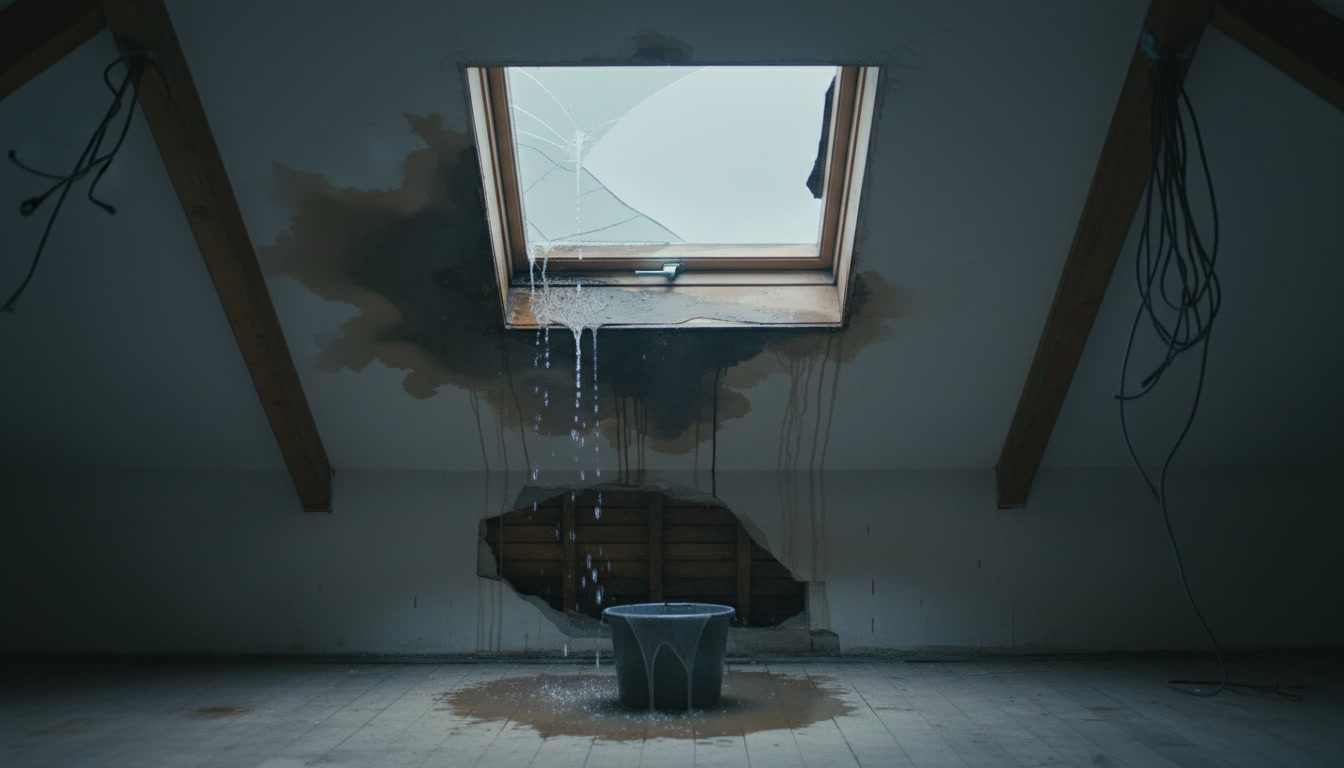
Water stains on the ceiling near a skylight indicate active leaking. The stain size visible on your ceiling represents only a fraction of the total water damage. Moisture spreads horizontally through insulation and along framing members before finally soaking through drywall where you can see it.
Even if the leak seems to have stopped, hidden damage continues. Damp insulation loses its effectiveness and encourages mold growth. Roof decking remains weakened and vulnerable to rot. Professional inspection determines the full extent of damage so repairs address all affected areas, not just the visible problems.
Drafts or Temperature Differences Around the Unit
Standing beneath your skylight during winter should not feel noticeably colder than other areas of the room. Cold drafts indicate seal failure or gaps in the mounting system. These same gaps that let cold air in also allow warm, moist interior air to escape into your attic space.
This air leakage creates condensation problems in your attic, leading to mold growth on rafters and sheathing. Your heating and cooling systems work harder to compensate, increasing energy costs. Replacing failing skylights improves both comfort and efficiency while preventing moisture-related damage.
Difficulty Operating Ventilating Models
Skylights designed to open for ventilation should operate smoothly throughout their lifespan. If your unit sticks, requires excessive force, or will not close completely, the frame has warped or the mechanism has corroded. An improperly closed skylight allows direct water entry during every rainstorm.
Warped frames also indicate the surrounding roof structure has shifted. This structural movement stresses all roofing components in that area. Addressing the skylight problem often reveals broader issues that require attention to prevent more extensive roof replacement down the line.
Comparing Repair Versus Full Replacement Options
Minor seal problems caught early sometimes respond to resealing with specialized roofing caulks. However, this approach only extends the unit’s life by a year or two. If your skylight has reached 15 years of age, replacement provides better long-term value than repeated repair attempts.
Full replacement allows you to upgrade to modern, energy-efficient models with improved sealing systems and better insulation. New skylights include updated flashing designs that integrate more effectively with current residential roofing materials. The labor cost for replacement is only marginally higher than comprehensive repairs, making replacement the smarter investment.
Protecting Your Home Before Problems Escalate
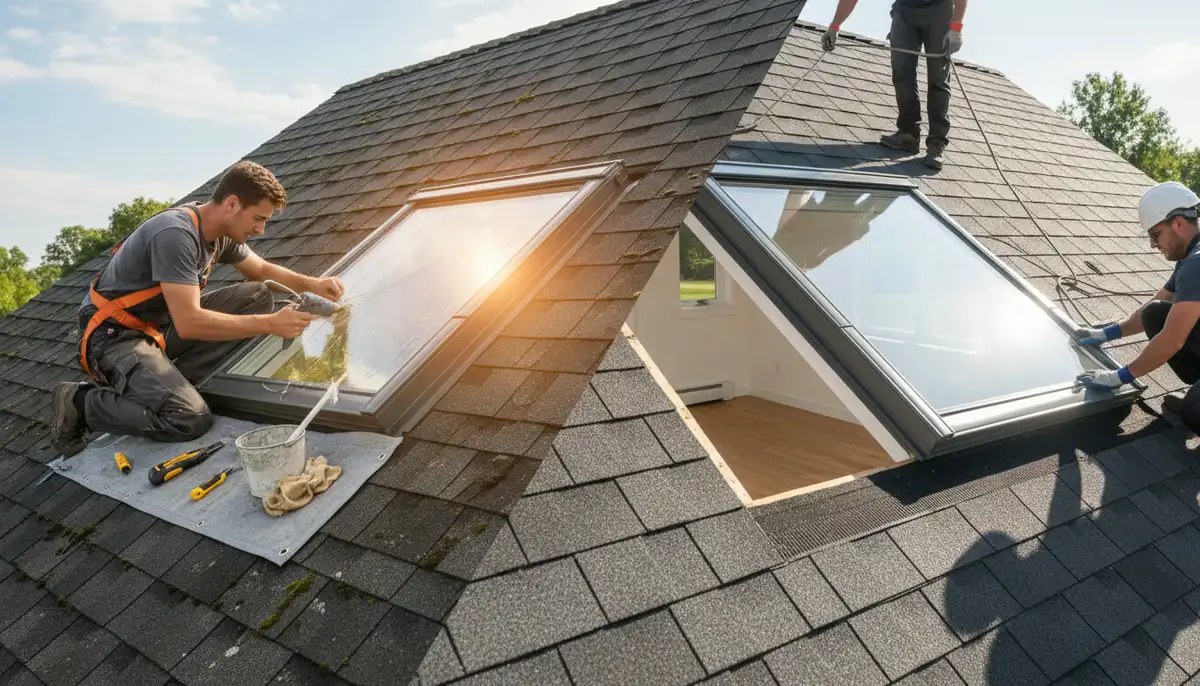
Regular skylight inspection should happen twice yearly, ideally during spring and fall. Look for any changes in appearance, test ventilating models for smooth operation, and check your attic for water stains on the surrounding framing. Early detection prevents minor issues from becoming structural emergencies.
Professional roofing contractors spot problems invisible to untrained eyes. A technician can identify subtle seal deterioration, measure insulation effectiveness, and assess whether surrounding roof components have been compromised. This expert evaluation determines whether you need immediate replacement or can safely wait another season.
Ensuring Long-Term Protection for Your Investment
Catching skylight problems early protects your home from expensive water damage and preserves your roof’s structural integrity. Visible condensation, cracks, damaged flashing, interior stains, drafts, or operating difficulties all signal that replacement should happen soon. Addressing these warning signs prevents cascade failures that affect surrounding roofing materials and interior spaces.
Stanley & Sons Roofing provides expert skylight assessment and replacement throughout the region. Our certified technicians identify problems before they cause serious damage and install new units with precision flashing and sealing systems designed for decades of reliable performance. Contact us at (856) 227-9555 to schedule a comprehensive skylight inspection and protect your home from preventable water damage.