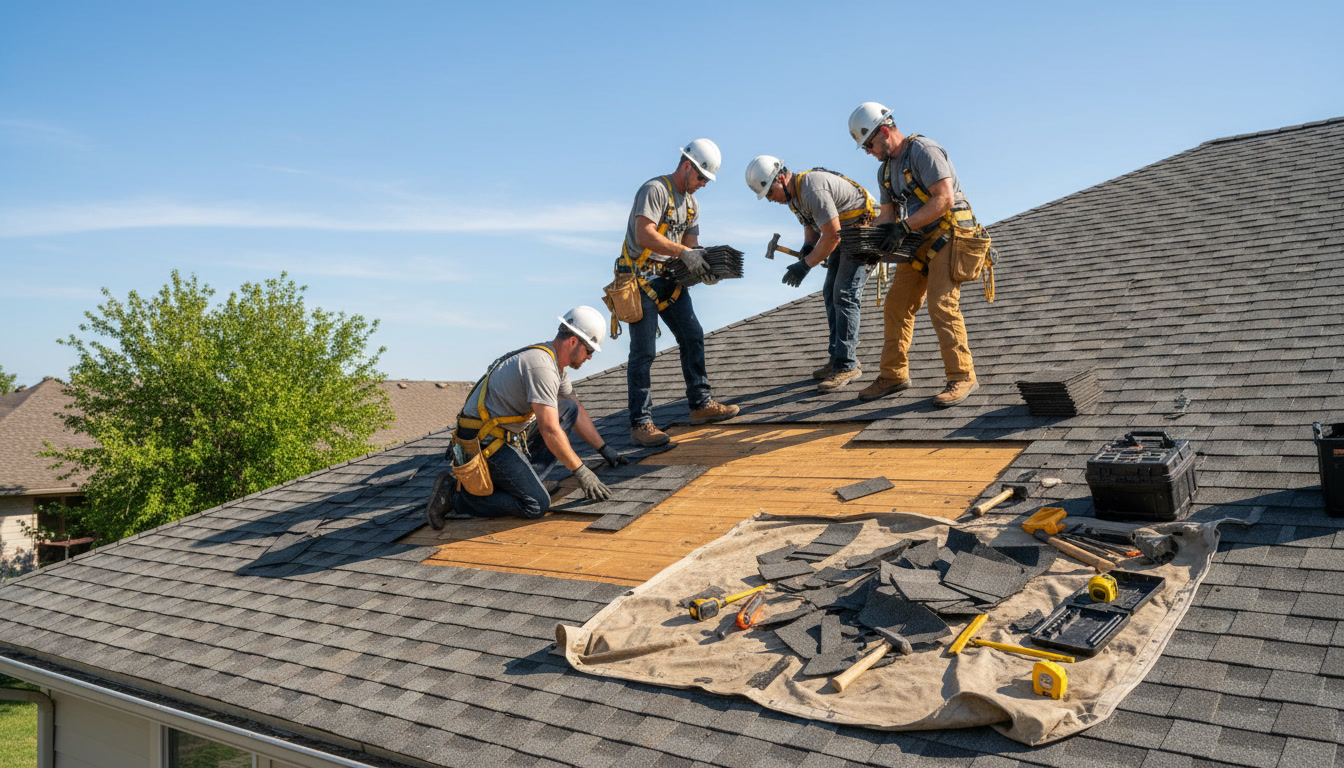
Partial roof repair addresses isolated damage without replacing your entire roofing system. The process involves assessing the affected section, matching existing materials as closely as possible, removing and replacing damaged components, and integrating the new work seamlessly with the surrounding roof. Understanding how roof repair works when only part of your roof needs attention helps homeowners make cost-effective decisions while maintaining structural integrity and curb appeal.
Why Isolated Damage Happens More Often Than Full Roof Failure
Roofs rarely fail uniformly across their entire surface. Wind typically hits certain sections harder based on your home’s orientation and surrounding landscape features. Trees overhanging specific areas drop debris that accelerates shingle deterioration in concentrated zones. Ice dams form along eaves and valleys rather than on open field areas. Mechanical damage from satellite installation, HVAC work, or fallen branches affects discrete locations.
The south and west-facing slopes receive more direct sunlight and UV exposure, causing those sections to age faster than north-facing areas. This uneven wear means a 20-year roof might need professional repair services on one slope while the others remain serviceable for several more years.
The Assessment Phase Determines Repair Scope
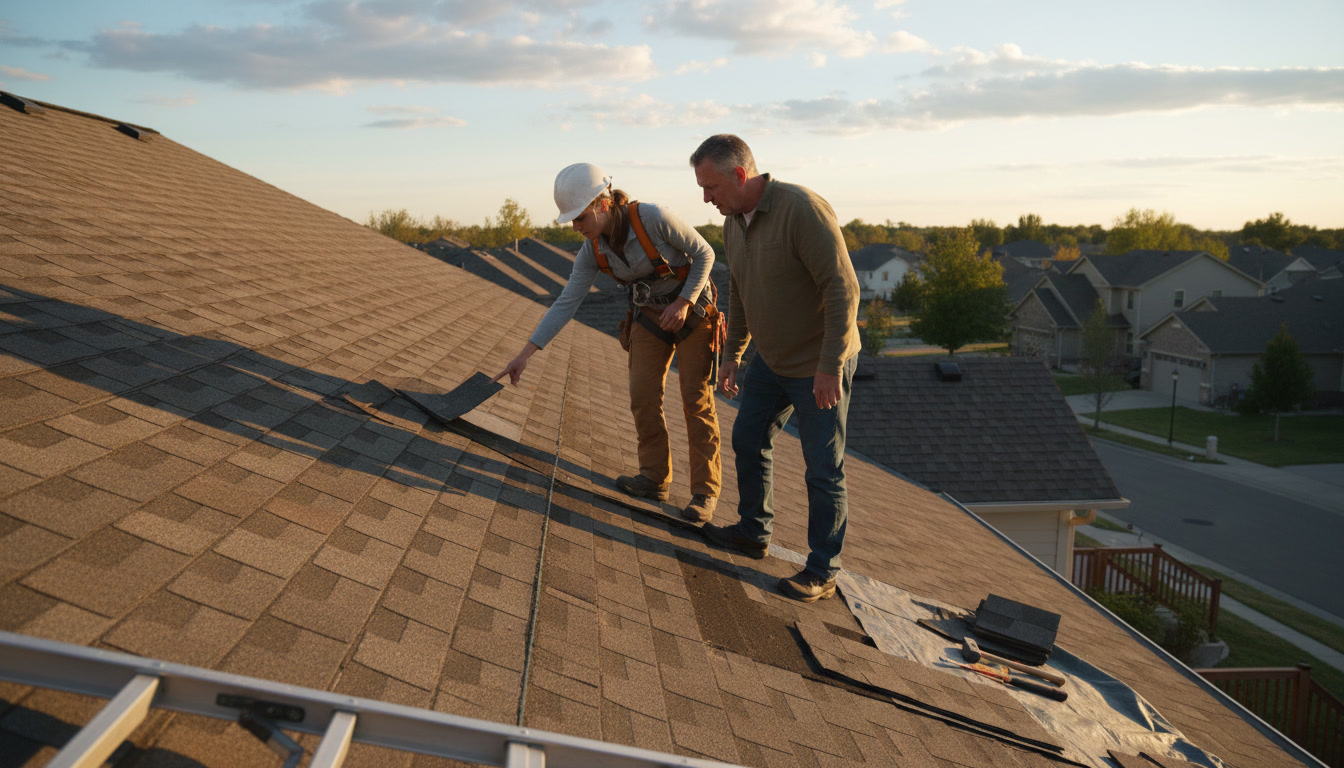
A thorough inspection identifies not just the visible damage but the underlying extent of the problem. Technicians check the condition of the roof decking beneath damaged shingles, looking for soft spots, rot, or structural compromise. They examine the surrounding shingles within a 10 to 15-foot radius to determine whether adjacent materials have similar wear patterns that could cause failures soon after completing the initial repair.
The assessment also evaluates whether your current shingle product is still manufactured and available. Discontinued lines create matching challenges that influence the repair strategy. Inspectors document the damage with photos and measurements, creating a clear scope of work that prevents surprises during the project.
Material Matching Creates the Biggest Challenge
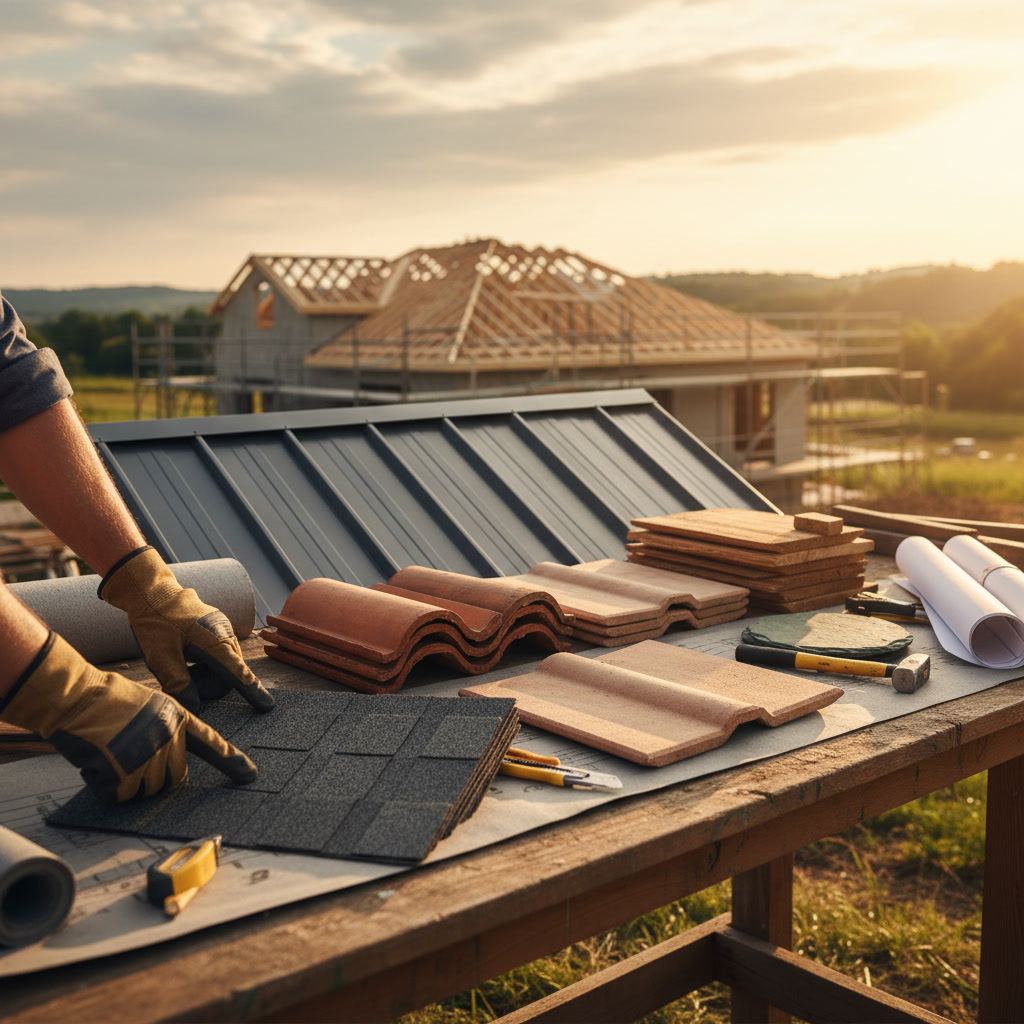
Achieving an invisible repair requires matching three characteristics: color, texture, and weathering. New shingles from the same product line will be brighter than your weathered roof, even if the manufacturer’s color name is identical. Shingles weather at different rates depending on sun exposure, making a perfect match nearly impossible on roofs older than five years.
Professional contractors address this by ordering slightly darker shades when available, or by installing new shingles on less visible slopes and moving weathered materials to the damaged area. Some manufacturers offer “aged” or weathered shingle options specifically for repair work, though availability varies by product line.
The granule coating on asphalt shingles changes slightly in color formulation over the years as manufacturers tweak their products. A Forest Green shingle manufactured in 2015 may not precisely match Forest Green from 2023, even from the same company. This reality means homeowners should set realistic expectations about color blending rather than expecting perfect invisibility.
When Partial Repair Makes Financial Sense in Gloucester Township
Repairing rather than replacing makes sense when damage affects less than 30 percent of the total roof area and the undamaged sections have at least five years of serviceable life remaining. For a typical South Jersey home with a 2,000-square-foot roof, repairing a 400-square-foot damaged section costs roughly one-quarter the price of a complete replacement.
The math changes if you’re planning to sell within two years. Potential buyers notice patched areas, and home inspectors will note the repair in their reports. In these cases, you might choose a full replacement to maximize resale value, or you might proceed with the repair and adjust your asking price accordingly.
Insurance coverage also influences the decision. If storm damage qualifies for a claim, your adjuster determines whether the damage warrants full replacement or partial repair based on your policy language and the percentage of affected area. Understanding these factors before starting work prevents disputes later.
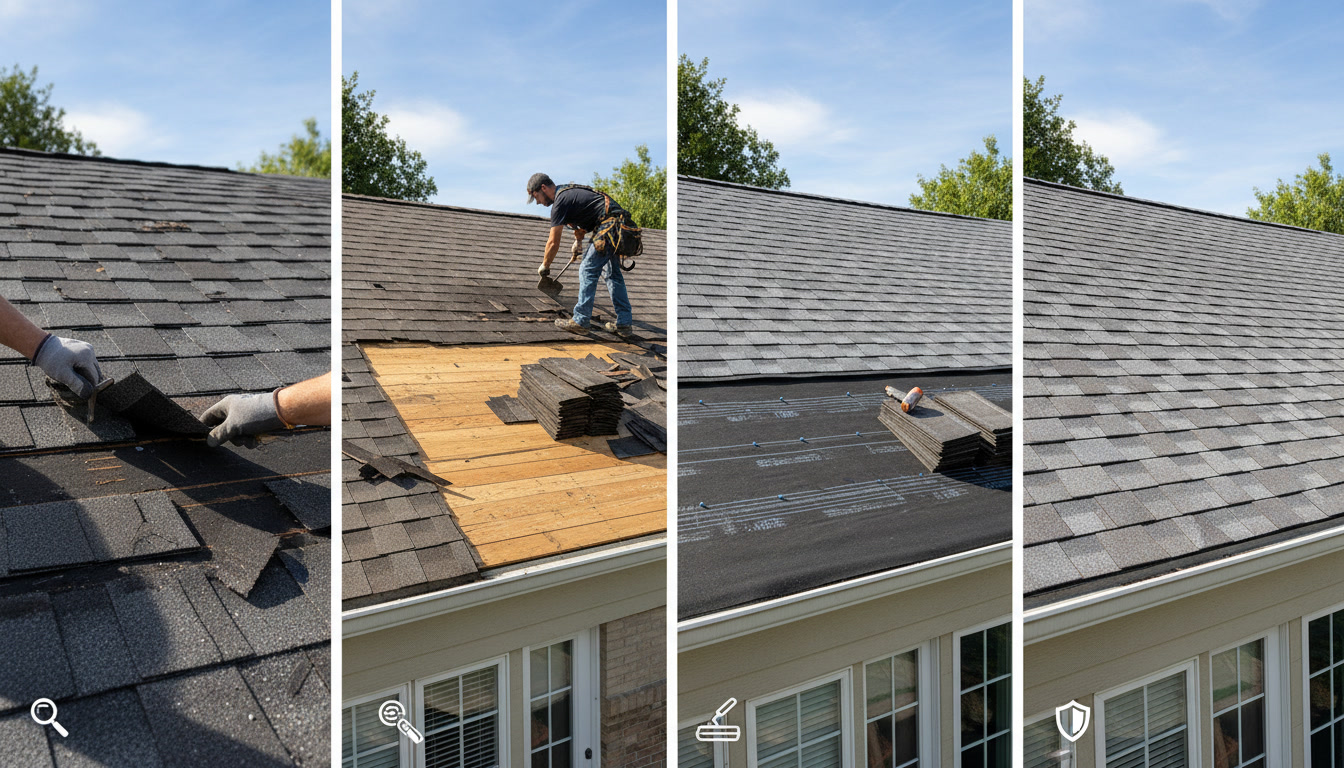
The Four-Step Repair Process
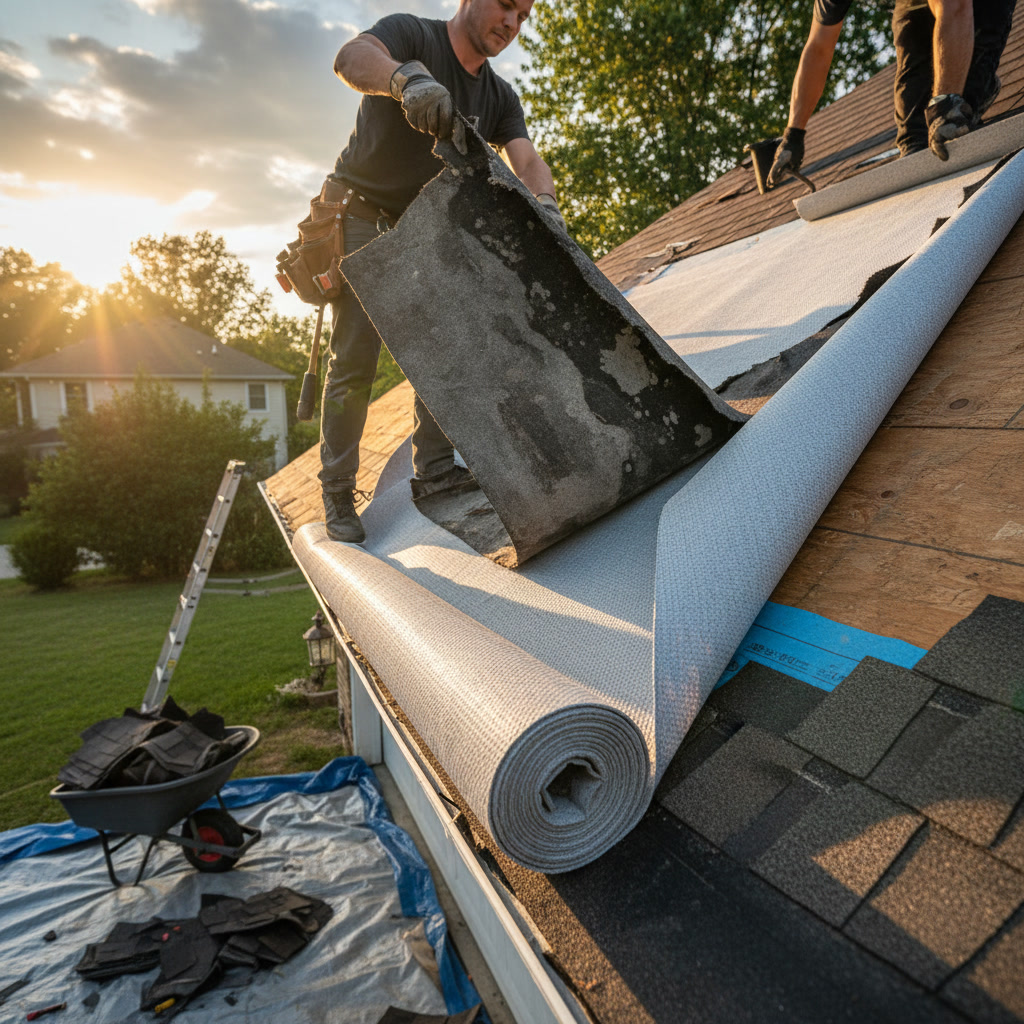
First, contractors remove damaged shingles and examine the underlying felt paper or synthetic underlayment. Any compromised underlayment gets replaced before new shingles go down, since water infiltration through damaged underlayment causes rot even under intact shingles.
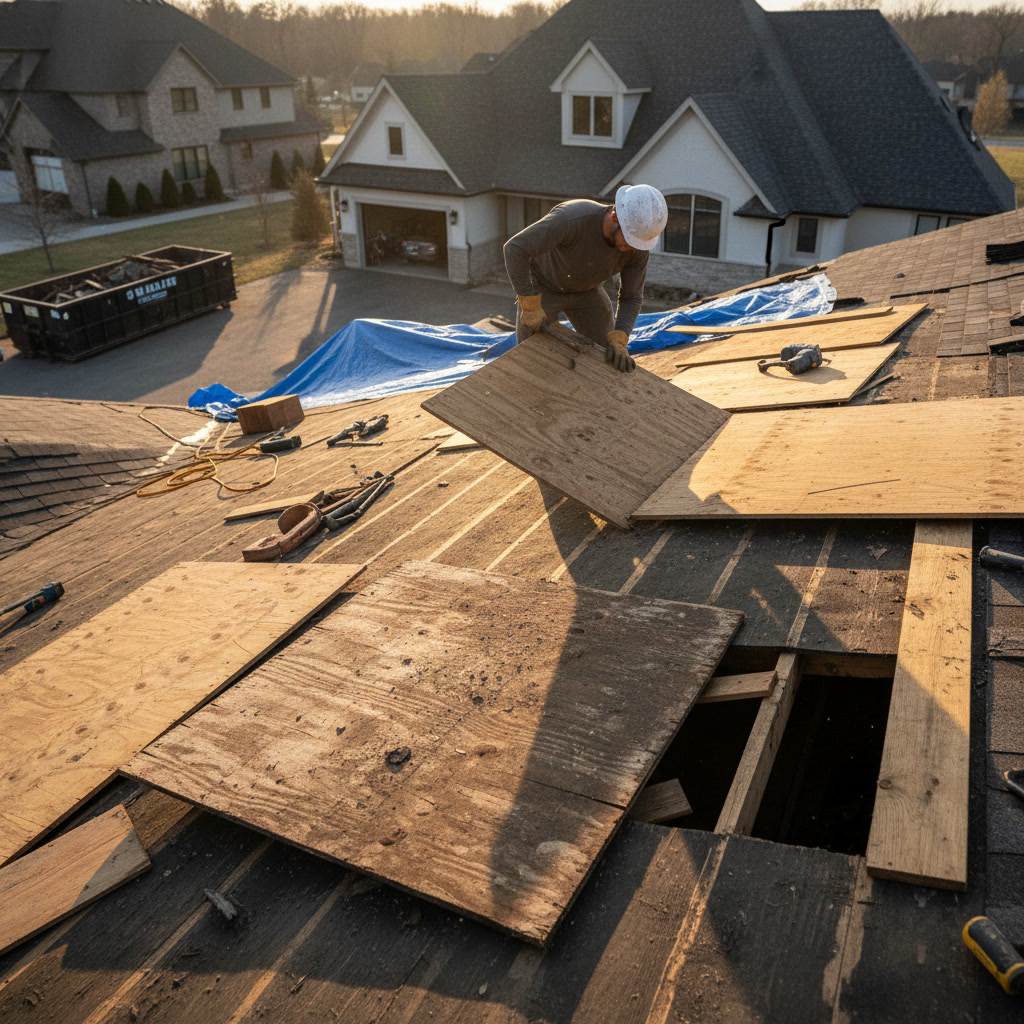
Second, the roof decking receives a close inspection. Soft spots indicate water damage requiring plywood replacement. Technicians cut out damaged sections and install new plywood or OSB sheathing, securing it with ring-shank nails spaced per building code requirements. Skipping this step leads to spongy areas that telegraph through new shingles and fail prematurely.
Third, new underlayment and shingles install following manufacturer specifications for overlap, nail placement, and sealing. Residential roofing professionals integrate the new work with existing materials by carefully removing the overlapping course above the repair area and weaving in the new shingles.
Fourth, technicians seal all edges and inspect the surrounding area for potential weak points that might fail soon. This proactive check prevents callback visits for adjacent problems that were developing but not yet visible during the initial assessment.
Structural Repairs That Often Accompany Shingle Replacement
Wind damage that rips off shingles often damages the roof decking underneath. Water that penetrates through missing shingles for even a few days saturates the plywood, causing delamination and loss of structural strength. These decking repairs add cost but are non-negotiable for a lasting fix.
Fascia boards and rake trim frequently sustain damage during the same events that harm shingles. Replacing these trim components as part of the repair prevents water intrusion behind gutter systems and protects the roof edges from future wind uplift.
Ventilation components like ridge vents or static vents sometimes need replacement or adjustment during repair work. Proper attic ventilation extends shingle life by reducing heat buildup, so addressing ventilation deficiencies during repair work makes economic sense even though it increases the project scope.
Valley and Flashing Repairs Require Extra Attention
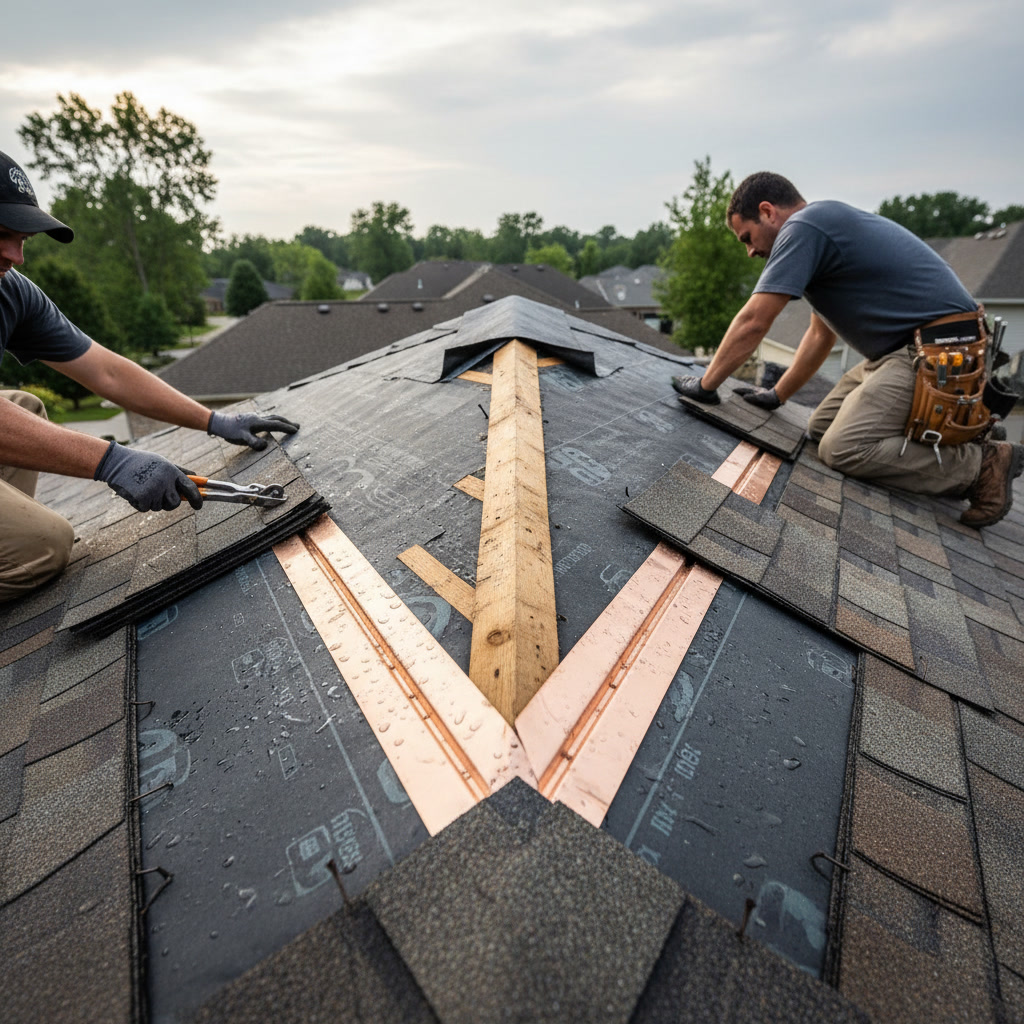
Roof valleys channel more water than any other roof area, making them prone to accelerated wear and leak development. When repairing sections that include valleys, contractors typically replace the entire valley metal from ridge to eave rather than trying to splice in a patch. This approach prevents future leaks at seams and ensures proper water flow.
Chimney flashing, pipe boots, and skylight flashing often outlive the surrounding shingles but should be evaluated during any repair. A 15-year-old pipe boot might have another five years of life under normal conditions, but if you’re replacing shingles around it, replacing the boot at the same time saves the cost of a future service call.
Step flashing along sidewalls integrates with both the shingles and the wall cladding. Replacing damaged sections requires coordination between roofing and siding, since you cannot simply remove shingles without disturbing the flashing. This interdependency is why repairs along dormers or sidewalls cost more per square foot than open field repairs.
What Homeowners Should Know About Repair Warranties
Manufacturer warranties on materials typically do not cover partial repairs unless you use the exact same product line already on your roof. Even then, the warranty on new materials runs independently from the warranty period on your original installation. You end up with different expiration dates for different roof sections.
Workmanship warranties from your contractor cover the repair area for a specified period, usually between one and five years depending on the company. These warranties protect you if the repair fails due to installation errors but do not extend to the unrepaired portions of your roof or to failures caused by subsequent storm damage.
Smart homeowners document the repair with photos and keep all invoices and warranty paperwork together. If you later need to determine whether a new problem falls within warranty coverage or if you’re making an insurance claim, this documentation proves invaluable. Sometimes problems that appear new are actually related to earlier repairs, and good records help clarify the timeline.
When Repair Transitions Into Replacement Territory
Multiple small repairs over two to three years often signal that your roof has reached the end of its serviceable life. Once you’ve repaired 40 percent or more of the total area, the remaining original sections become the weak links likely to fail next. At this threshold, investing in a complete replacement makes more financial sense than continuing piecemeal repairs.
If you’re having trouble matching materials because your shingle line is discontinued, or if the color difference between new and old is so pronounced that it affects your home’s appearance, replacement becomes the better option. Curb appeal matters for resale value, and a patchwork roof can decrease your home’s marketability more than the repair saves in upfront costs.
Recognizing when repair no longer makes sense requires honest assessment of your roof’s overall condition. Contractors who push for full replacement when repair would suffice are problematic, but so are those who keep taking your money for repairs on a roof that’s fundamentally at the end of its life.
The Cost Structure of Partial Roof Repairs
Labor represents the largest cost component in small repairs, since technicians need the same equipment, insurance, and safety setup for a 200-square-foot patch as for a 2,000-square-foot roof. This fixed-cost reality means that very small repairs cost disproportionately more per square foot than large projects.
Material costs for matching products sometimes exceed standard product costs, especially if contractors need to special-order discontinued lines or purchase aged shingles designed for repair work. Small quantities also mean you lose the volume discounts that apply to full roof orders.
Additional costs arise when repairs uncover hidden damage. Soft decking, rotted fascia, or compromised trusses discovered during shingle removal add to the final bill. Reputable contractors provide estimates that include allowances for reasonable hidden damage, giving you a realistic budget range rather than a lowball figure that balloons once work begins.
Protecting Your Investment After Partial Repairs
Scheduling an annual inspection after completing a partial repair helps catch new problems early, when they’re still small and inexpensive to fix. These inspections focus on the transition zones where new work meets old, since these boundaries are most vulnerable to separation and water infiltration.
Keeping gutters clear and maintaining proper attic ventilation extend the life of both your repair and your remaining original roof. Heat and moisture are the two factors that age shingles fastest, so controlling attic temperature and humidity protects your investment from the inside out.
Trees near your home should be trimmed to prevent branches from rubbing on the roof and to reduce debris accumulation. Overhanging limbs create shaded, damp conditions that encourage moss and algae growth, both of which accelerate shingle deterioration and create localized damage that requires future repairs.
Making the Right Decision for Your Home
Partial roof repair offers a cost-effective solution when damage is truly isolated and your remaining roof has years of serviceable life ahead. The key to success lies in accurate assessment, quality materials, skilled installation, and realistic expectations about color matching and warranty coverage. A well-executed repair protects your home immediately while buying time to budget for eventual full replacement.
Stanley & Sons Roofing brings decades of specialized experience to every repair project, from small storm damage fixes to complex multi-component repairs. Our certified technicians assess damage honestly, match materials carefully, and integrate new work seamlessly with existing systems throughout Gloucester Township and surrounding communities. When your roof needs attention, contact us at +18562279555 for a thorough evaluation and detailed repair plan tailored to your home’s specific needs.