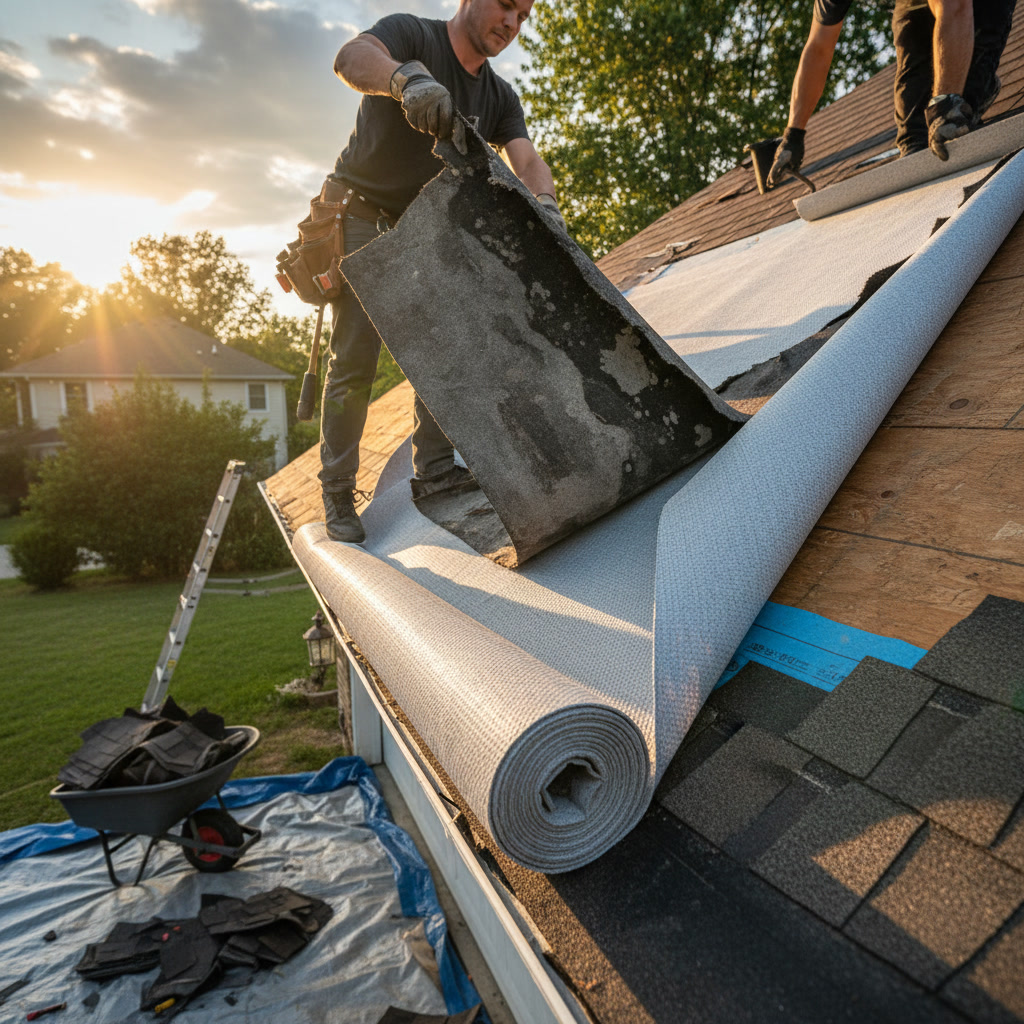
Roof underlayment serves as your home’s critical waterproof barrier between shingles and decking. This protective layer prevents moisture infiltration during storms and when shingles fail, extending your roof’s lifespan by years. While hidden from view after installation, underlayment determines whether minor shingle damage becomes a major leak or simply gets addressed during routine maintenance. Understanding when roof underlayment replacement becomes necessary helps homeowners protect their investment and avoid costly water damage.
The Hidden Layer That Makes or Breaks Your Roof
Your roof system consists of multiple components working together to keep water out. Shingles form the visible outer layer that deflects rain and snow. Beneath them, underlayment provides the actual waterproof membrane that stops moisture from reaching vulnerable wood decking. This secondary barrier becomes your primary defense when shingles crack, lift, or blow away during severe weather.
Modern roofing codes require underlayment on all residential installations because it performs several critical functions. It protects exposed decking during construction before shingles go on. It prevents wind-driven rain from penetrating nail holes and seams. Most importantly, it gives you time to schedule repairs when shingle damage occurs, rather than facing immediate interior water damage.
Understanding Different Underlayment Materials
Three main types of underlayment materials serve residential applications, each with distinct performance characteristics. Asphalt-saturated felt, the traditional option, consists of organic or fiberglass matting saturated with asphalt. Available in 15-pound and 30-pound weights, felt paper costs less but tears more easily during installation and degrades faster than synthetic alternatives.
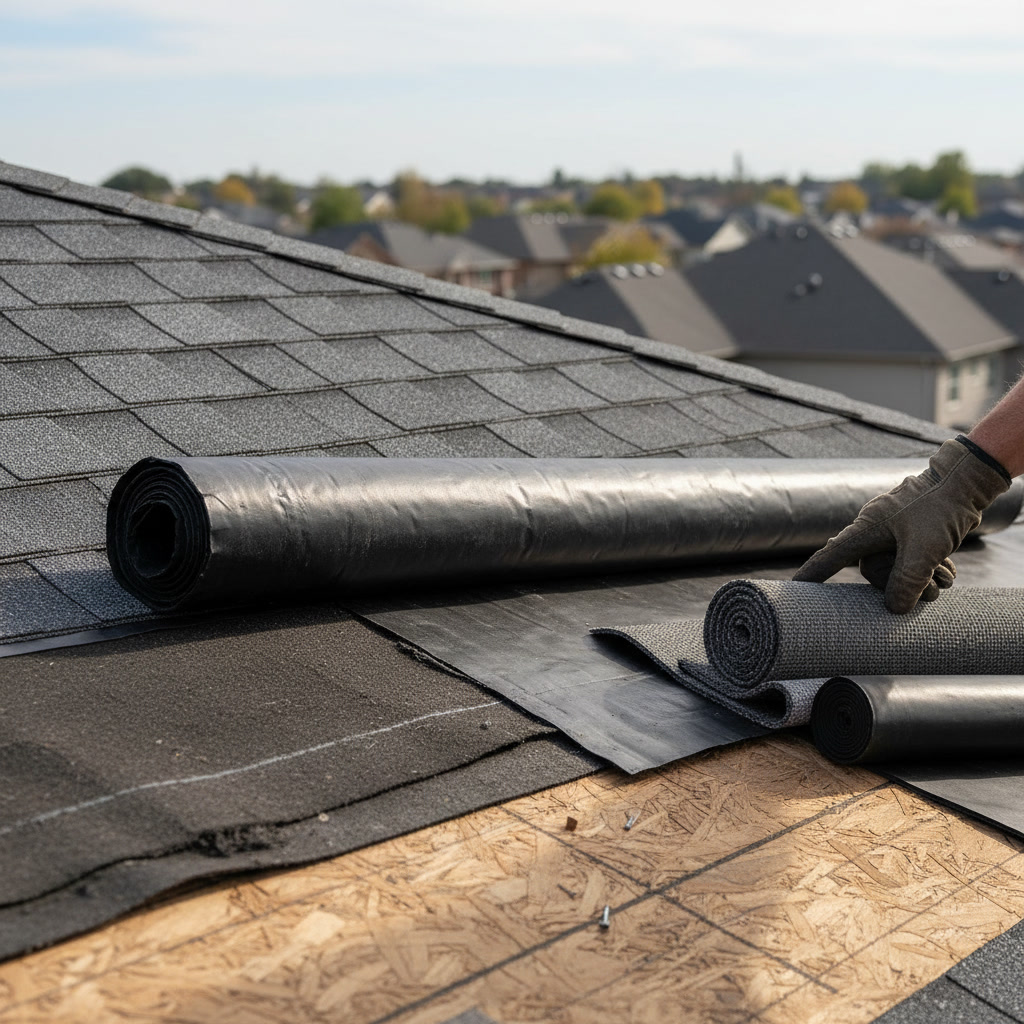
Synthetic underlayment uses polyethylene or polypropylene materials that resist tearing, repel water more effectively, and withstand UV exposure for months if installation delays occur. These products typically cost 25 to 40 percent more than felt but offer superior durability and easier handling. Many manufacturers now require synthetic underlayment to validate extended warranty coverage on premium shingle lines.
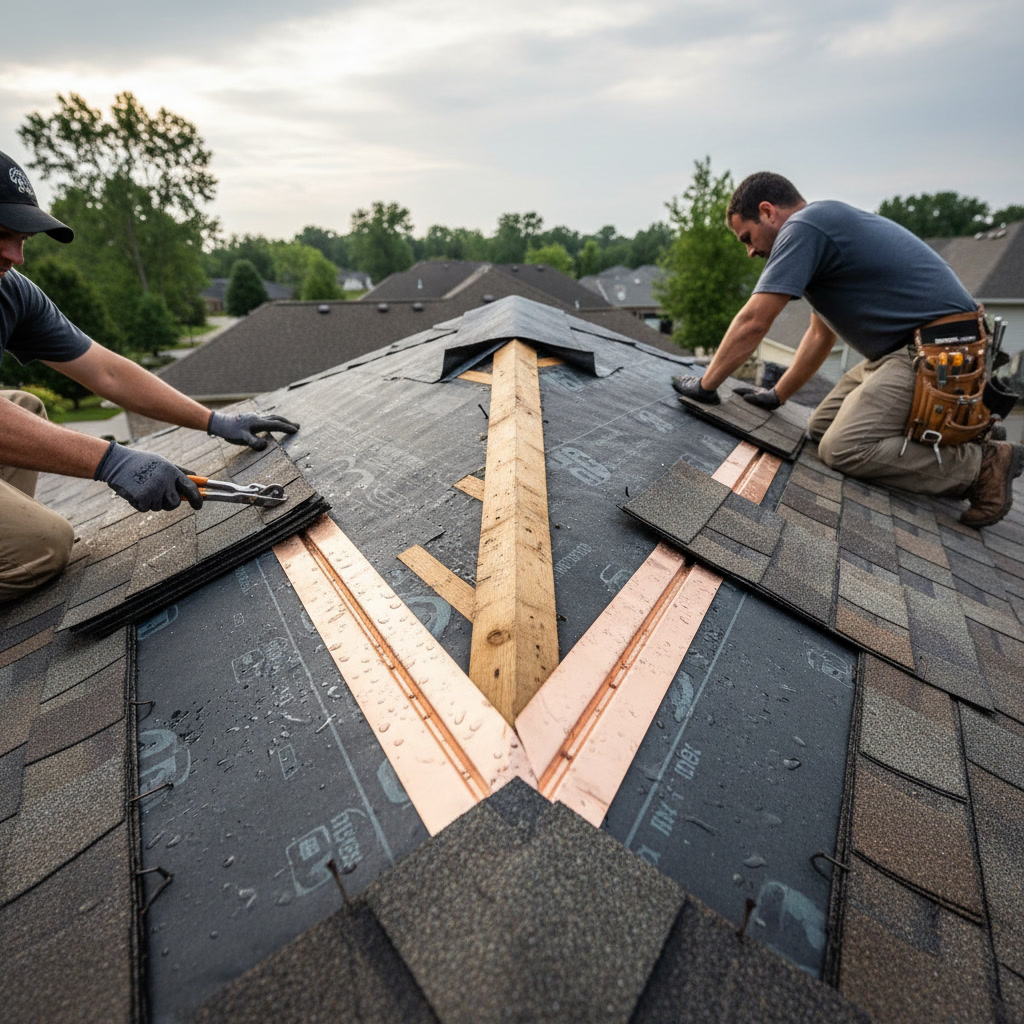
Rubberized asphalt underlayment, often called ice and water shield, provides self-sealing protection around roof penetrations and vulnerable areas. This premium material costs significantly more but creates watertight barriers in valleys, along eaves, and around chimneys where leaks most commonly develop. Most quality installations use rubberized products in critical zones and synthetic materials across field areas.
How Underlayment Protects Against Water Damage
Water follows the path of least resistance, seeking any opening to penetrate your roof deck. Shingle tabs overlap to direct water downward, but wind can drive moisture sideways under edges. Nail holes create dozens of potential entry points per square foot. Temperature changes cause materials to expand and contract, opening microscopic gaps over time.
Quality underlayment stops water at every vulnerable point. The material extends past roof edges to direct moisture into gutters rather than allowing it to wick back under shingles. Proper overlap patterns create shingled layers that channel water away from seams. In valleys where water concentrates, underlayment handles flows that would quickly saturate felt paper or organic materials.
The self-sealing properties of rubberized underlayment around penetrations demonstrate why material choice matters. When nails or screws pierce this membrane, warmth activates adhesive compounds that seal tightly around fasteners. Standard felt offers no such protection, relying entirely on overlapping shingles to keep water away from fastener holes.
Signs Your Underlayment Has Failed in Gloucester Township
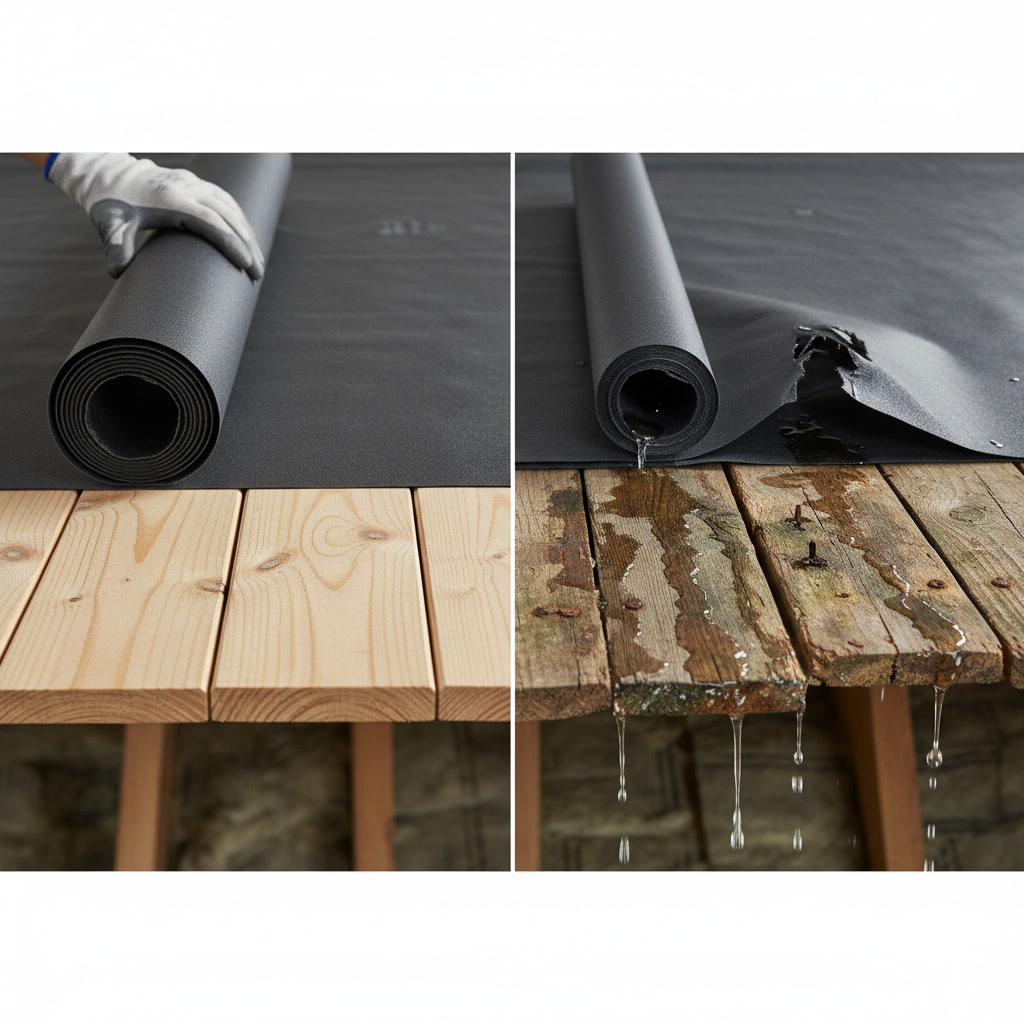
Most underlayment failures remain invisible until significant damage occurs. Water stains on ceilings or walls indicate moisture has penetrated both shingles and the layer beneath. By the time interior damage appears, wood decking may have sustained rot requiring costly repairs beyond simple roof repair work.
Attic inspections reveal underlayment problems before they cause interior damage. Dark stains on roof decking undersides show where water has penetrated. Daylight visible through nail holes suggests deteriorated underlayment that no longer seals around fasteners. Sagging areas or visible tears in the material indicate immediate replacement needs.
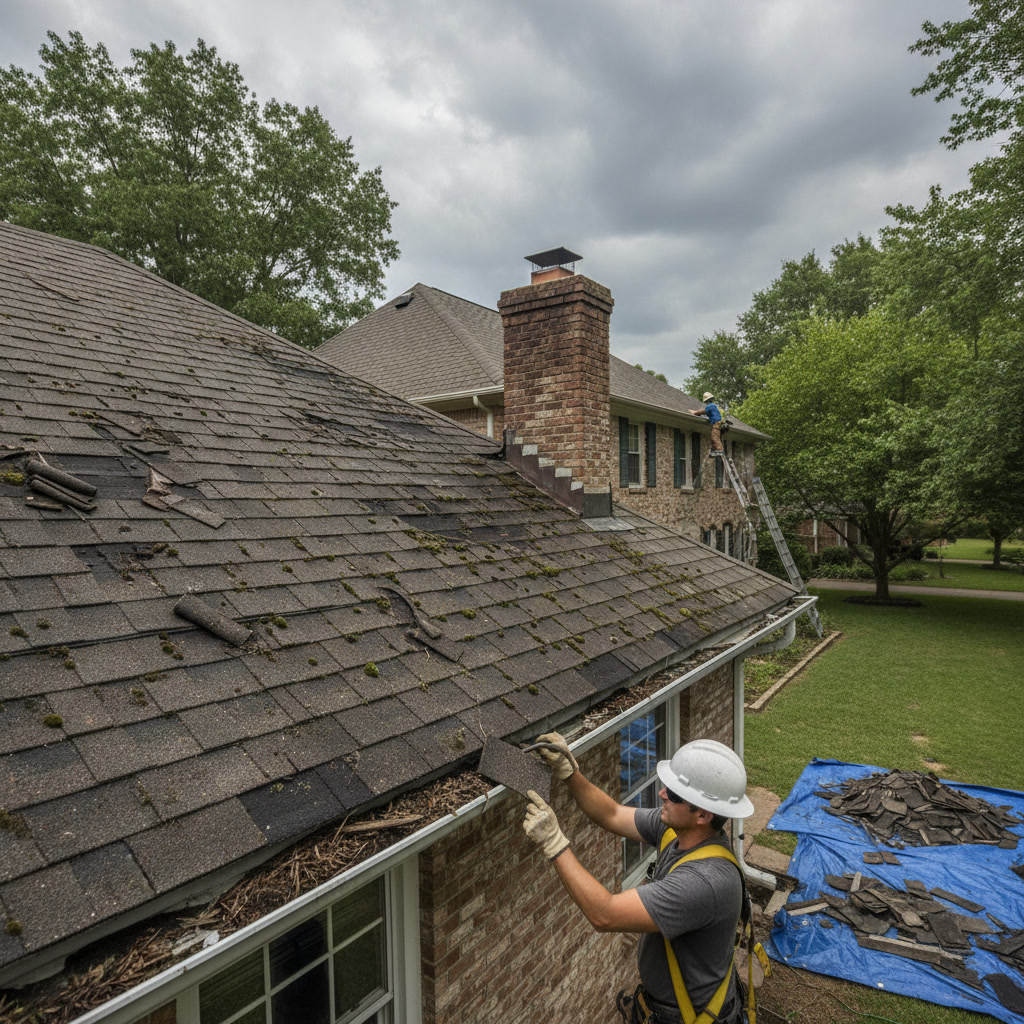
Age alone determines replacement timing for many homes. Felt underlayment installed 20 to 25 years ago has likely degraded even without visible damage. If your shingles approach the end of their service life, the hidden barrier beneath them has experienced identical exposure to temperature extremes, moisture cycles, and time.
When Replacement Becomes Necessary
Complete residential roofing replacements always include new underlayment installation. Attempting to reuse old material saves minimal money while creating significant risk. Used underlayment contains thousands of old nail holes, tears from removal efforts, and degraded waterproofing that compromises the entire new roof system.
Partial roof repairs sometimes allow existing underlayment to remain if the material shows no deterioration. When replacing a few damaged shingles, exposing and evaluating the layer beneath helps determine whether localized underlayment replacement makes sense. However, any visible tears, brittleness, or separation means the surrounding areas have likely degraded similarly.
Storm damage assessments should always evaluate underlayment condition, not just visible shingle problems. Hail impacts that crack shingles may have driven granules through underlayment or created punctures. High winds that lift shingle edges often tear the barrier beneath. Insurance adjusters sometimes miss this hidden damage, but experienced contractors know to inspect and document it.
The Replacement Process Step by Step
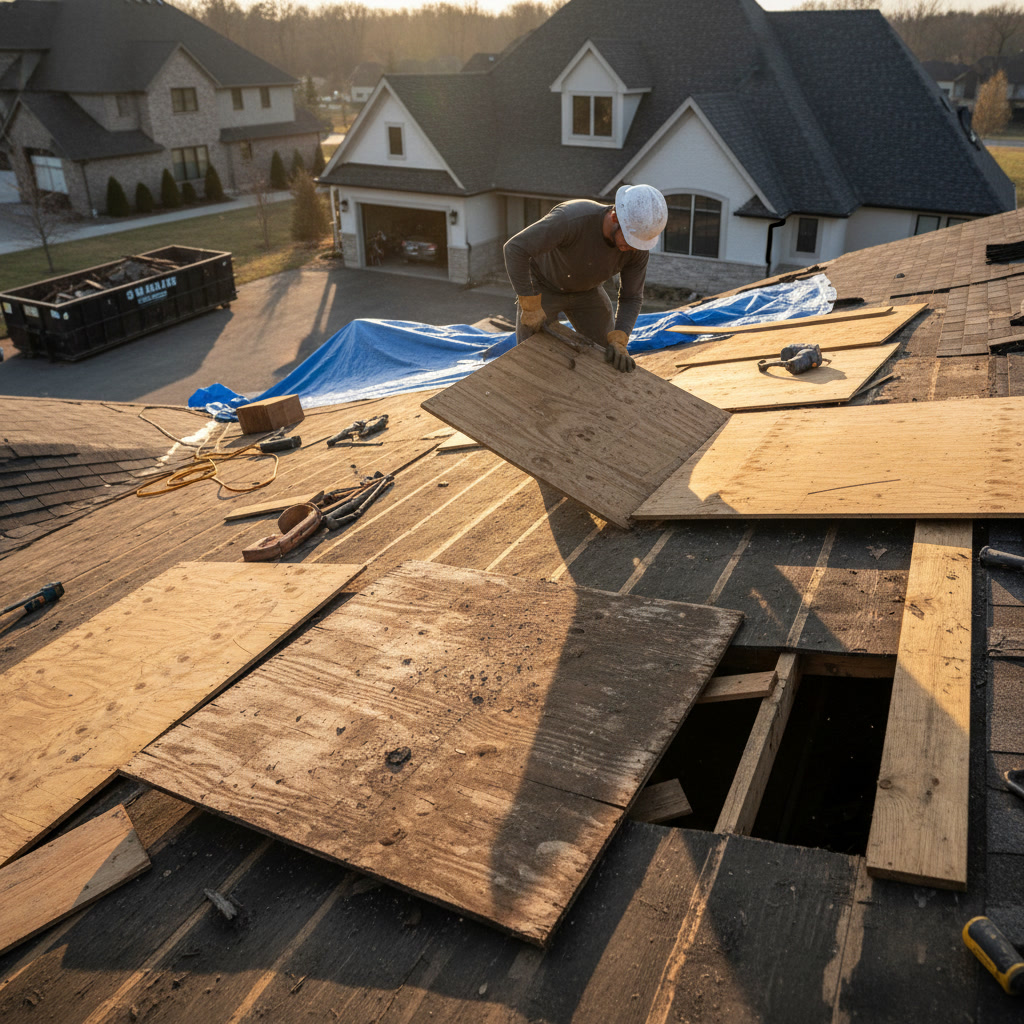
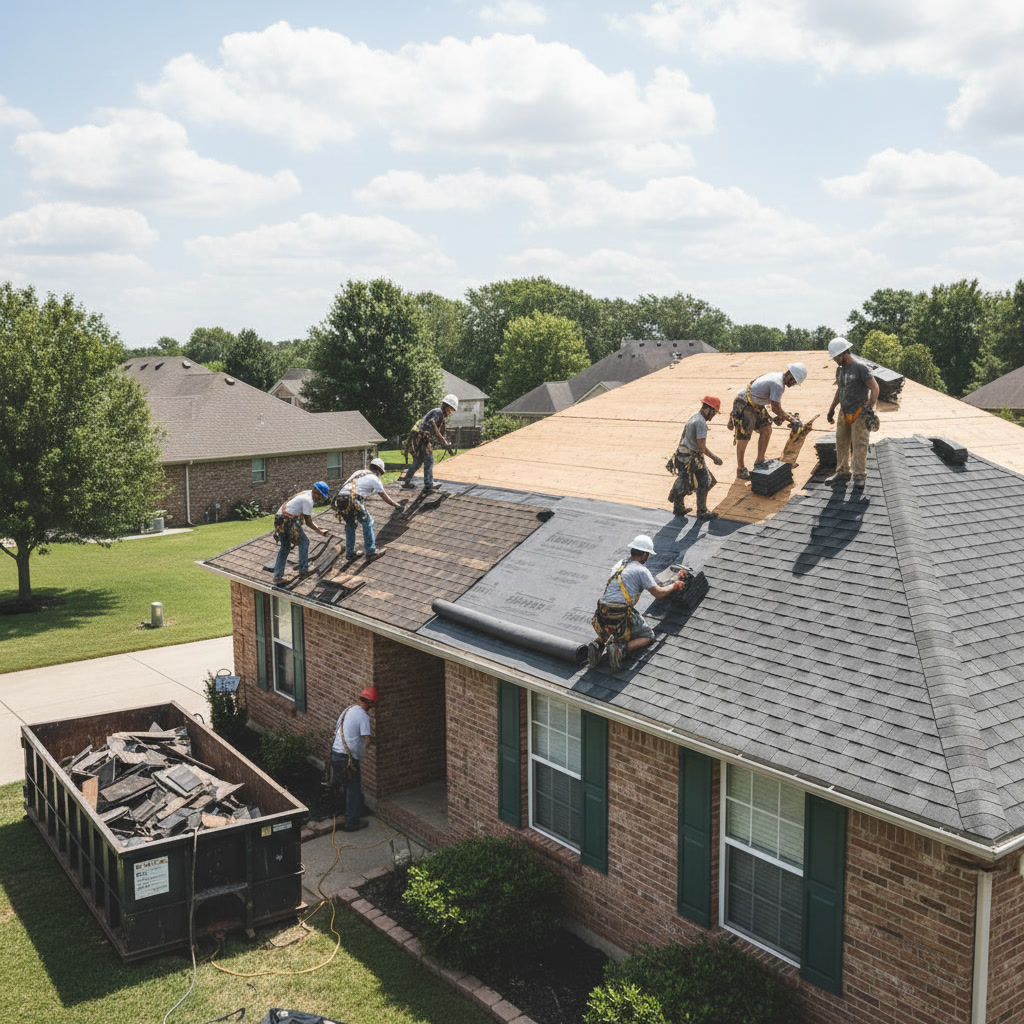
Professional underlayment replacement begins with complete removal of existing roofing materials down to bare decking. Crews inspect every section of plywood or OSB sheathing for soft spots, rot, or damage requiring repair. Any compromised decking gets replaced before new underlayment installation begins, ensuring a solid foundation.
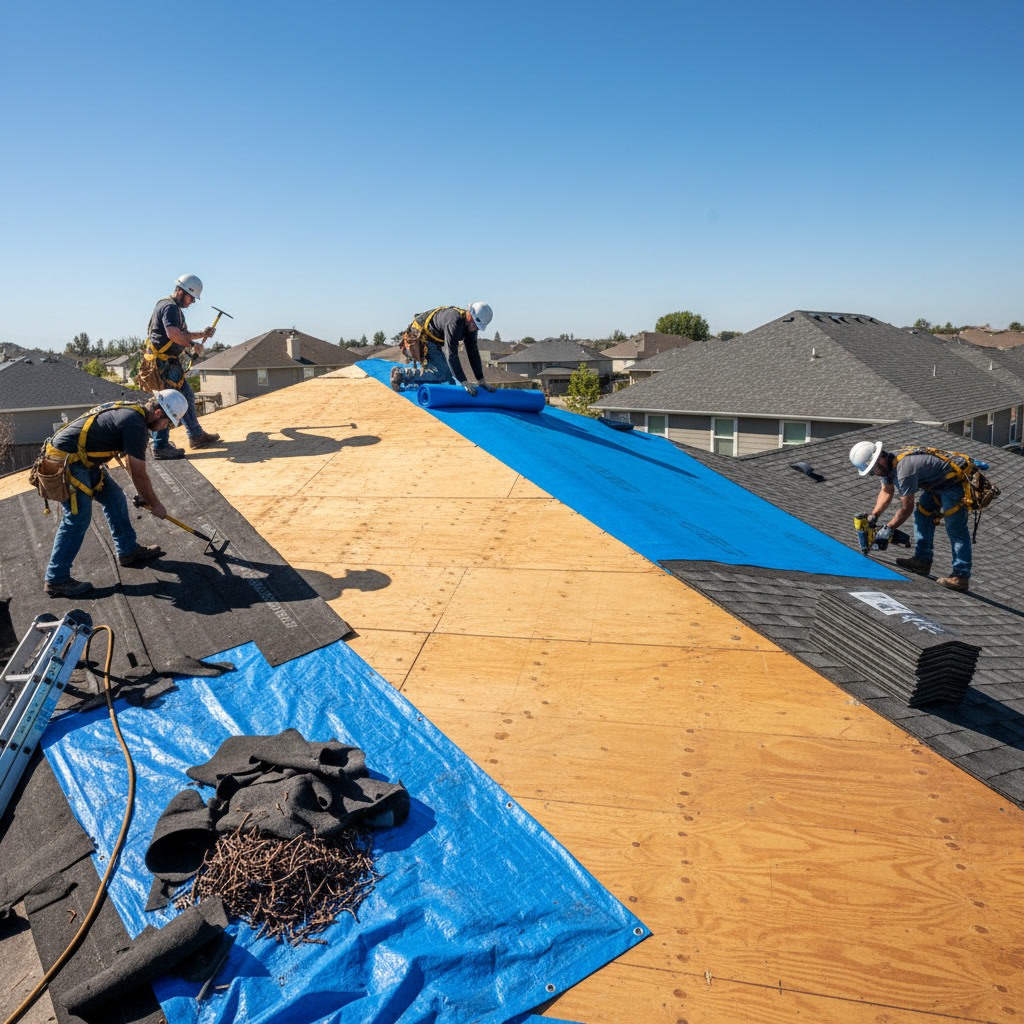
Installation starts at the eaves with ice and water shield extending at least 24 inches past interior wall lines. This protects against ice dams that form when melting snow refreezes at roof edges. Valley areas receive full coverage with rubberized materials before field underlayment goes down. Proper overlap patterns ensure water cannot penetrate seams, typically requiring four to six inches of overlap between rows.
Fastener placement follows manufacturer specifications to prevent tears while securing material against wind. Synthetic products require fewer fasteners than felt because superior tear strength allows wider spacing. Crew members carefully work around penetrations like skylights and vent pipes, ensuring complete sealing before shingle installation begins.
Material Costs and Longevity Expectations
Budget-conscious homeowners often ask whether premium underlayment justifies higher costs. Standard felt paper runs approximately $30 to $50 per square (100 square feet of coverage). Synthetic alternatives cost $60 to $90 per square, while rubberized membranes reach $150 to $250 per square depending on brand and features.
Service life differences explain the cost gap. Felt underlayment typically lasts 15 to 25 years before degradation compromises performance. Quality synthetic products carry 30 to 50 year ratings and often outlast the shingles installed over them. Some manufacturers now offer synthetic underlayment with lifetime warranties when paired with their premium shingle lines.
The math becomes clear when planning long-term roof investments. Installing 30-year architectural shingles over 20-year felt means your waterproof barrier may fail before your visible roof surface does. Choosing synthetic underlayment that matches or exceeds shingle longevity protects your entire investment and eliminates premature replacement costs.
How Decking Condition Affects Underlayment Performance
Even premium underlayment cannot compensate for failing roof decking. Plywood or OSB panels that have softened from previous water exposure create uneven surfaces where materials cannot seal properly. Fasteners pull through degraded wood, leaving gaps that allow wind to lift underlayment and shingles together.
Understanding how roof decking condition affects your project helps homeowners budget appropriately for complete repairs. Contractors who discover extensive decking damage during tear-off must replace compromised sections before proceeding. This unexpected expense frustrates homeowners, but attempting to install new roofing over failing substrates wastes money and creates immediate problems.
Proper ventilation extends both decking and underlayment service life by controlling attic moisture and temperature extremes. Homes with inadequate ventilation experience accelerated material degradation from constant heat and humidity exposure. Addressing ventilation deficiencies during underlayment replacement prevents premature failure of new materials.
Why DIY Underlayment Replacement Rarely Succeeds
Homeowners with construction experience sometimes attempt underlayment replacement to save labor costs. This approach creates multiple risks that typically outweigh potential savings. Improper overlap patterns, incorrect fastener placement, or inadequate sealing around penetrations compromise the entire roof system, often causing damage that exceeds professional installation costs.
Manufacturer warranties require certified installer involvement for coverage validation. Installing underlayment yourself voids material warranties and prevents claims if premature failure occurs. Additionally, most premium products come with labor warranties when certified contractors perform installation, coverage you forfeit with DIY approaches.
Safety concerns make professional installation essential for most homeowners. Roof work involves significant fall risks, especially on steeper pitches common in residential construction. Professionals carry liability insurance and workers compensation coverage that protects homeowners if accidents occur. DIY installers assume all liability and risk serious injury on projects requiring specialized equipment and experience.
Coordinating Underlayment Work With Other Roof Components
Smart homeowners coordinate underlayment replacement with related improvements that share labor and access requirements. Installing new gutters during roof replacement eliminates separate mobilization costs and ensures proper integration between systems. Edge metal and drip edge components install directly over underlayment, so replacing these elements together creates optimal weather protection.
Chimney flashing, vent boots, and pipe collars all penetrate underlayment and require careful sealing. Replacing these components during underlayment work costs less than separate service calls and prevents potential leak points. Knowing the signs you need a new roof helps you plan comprehensive projects that address all aging components simultaneously.
Timing coordination becomes especially important for homes in areas with distinct weather seasons. Spring and fall offer ideal conditions for roofing work, with moderate temperatures that allow proper material adhesion and comfortable working conditions. Scheduling underlayment replacement during these windows ensures quality installation and minimizes weather-related delays.
Protecting Your Home Investment With Quality Barriers
Roof underlayment represents a small percentage of total roofing costs but provides disproportionate value in protecting your home. Choosing quality materials and professional installation prevents water damage that costs thousands to repair. Understanding replacement timing helps you address problems before minor issues become major expenses.
The waterproof barrier beneath your shingles deserves the same attention you give to visible roof components. Regular inspections, prompt repairs, and strategic replacement planning keep this critical layer functioning properly throughout your roof’s service life. Homeowners who prioritize underlayment quality enjoy better protection, longer system life, and fewer unexpected problems.
Stanley & Sons Roofing brings decades of experience to every underlayment installation and replacement project throughout the region. Our certified technicians understand how material selection, proper installation techniques, and comprehensive planning create roof systems that protect your family and property for decades. When your home needs expert evaluation or professional replacement services, contact us at +18562279555 to schedule a thorough inspection and discuss your options.